Posted on 6/26/2026

Car A/C service has changed quite a bit over the last several years. Many newer vehicles no longer use the older R-134a refrigerant that drivers and shops were used to for so long. Instead, they use R-1234yf, a newer refrigerant designed to reduce environmental impact while still keeping the cabin cool. That change matters when your A/C stops cooling the way it should. The fittings, service equipment, refrigerant handling, leak checks, and repair process are different. If your vehicle uses R-1234yf, it needs the right equipment and a shop that knows how to service the system correctly. Why R-1234yf Became More Common R-1234yf was introduced because older refrigerants had a much higher global warming impact. Automakers moved toward refrigerants that meet newer environmental standards, especially in newer vehicles. The change was not about making A/C repairs more complicated for drivers, though it did make service more specific. For the driver, the A/C system still d ... read more
Posted on 5/29/2026

Mini Cooper owners usually notice quickly when the car feels different. These cars have a distinct feel, and even a small change in power, steering, shifting, or noise can stand out. The problem is that early symptoms can seem minor enough to ignore for a while. In the shop, we see certain Mini Cooper repair issues come up more than others. Some are tied to mileage, some to heat, and others to service history. The good news is that many of them are easier to handle when they are caught early. Oil Leaks Around The Engine Oil leaks are one of the more common Mini Cooper problems, especially as gaskets and seals age. Valve cover gaskets, oil filter housings, oil pan gaskets, and timing cover areas can all develop leaks. Some drivers first notice a burning smell after parking. Others see oil spots under the car or residue collecting around the engine. A small leak should not be treated like normal aging ... read more
Posted on 4/30/2026

Many Ford owners keep driving through early symptoms because the vehicle still feels usable. It starts, moves, and gets through the week, so the change doesn't seem serious enough to address right away. That is usually how repair costs begin to climb. Small issues tend to go unnoticed until extra wear builds up around them. The earlier you catch the shift, the better your chance of keeping the repair limited to one area. 1. Rough Idle Or A Light Misfire A minor misfire does not always feel urgent. You may notice a slight shake at a stoplight, a stumble during acceleration, or an engine that feels uneven for a few moments before settling down. Many drivers put that off because the vehicle still runs well enough. The trouble is that a misfire puts extra stress on the ignition and exhaust system. If it stays active too long, fuel can move into the exhaust and overwork the catalytic converter. A repair that might have started with plugs or coils can get much more e ... read more
Posted on 3/27/2026
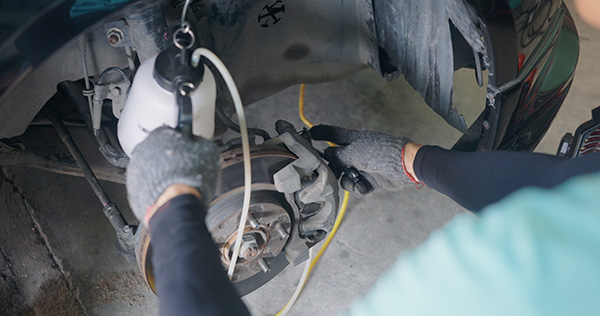
Brake fluid is easy to forget because it’s not something you see or smell day to day. The car can stop fine for a long time even when the fluid is past its best. That is exactly why people skip it until a brake job or a warning forces the conversation. A flush is not about making the pedal feel different for one drive, but it keeps the system healthy over the long haul. If you have never had it done, or you cannot remember the last time, it is worth understanding what changes inside the system over time. What Brake Fluid Does Beyond Moving Pressure Brake fluid transfers your pedal pressure to the calipers so the pads clamp the rotors. It also has to withstand heat without boiling, because the brakes generate a lot of heat during repeated stops. If the fluid boils, it forms vapor, and vapor compresses, which can reduce stopping consistency. The other job brake fluid does is protect internal components from corrosion. That matters because brake systems have sma ... read more
Posted on 2/27/2026
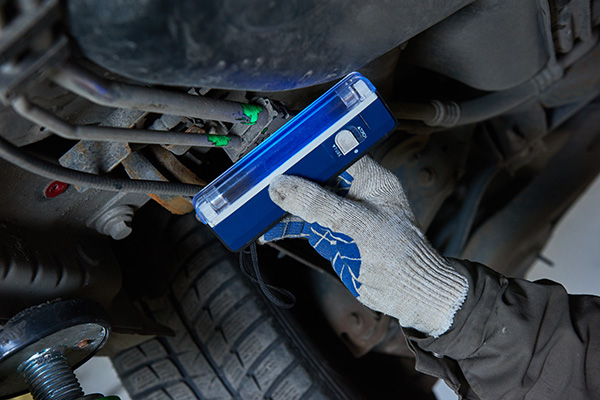
A/C leaks usually do not announce themselves with a big puddle or an obviously broken part. Most of the time, cooling just slowly gets weaker, especially on hotter days or when you are sitting in traffic. That slow change is why people end up topping off refrigerant more than once, even though refrigerant does not get used up. When you find the leak early, the repair is usually simpler, and the A/C stays cold longer. Why Dye Testing Works For A/C Leak Finding Dye testing works because most A/C leaks carry a little bit of refrigerant oil with them. A UV dye is added to the system, then the vehicle is run normally so the dye circulates with the oil. If refrigerant escapes, the dye tends to leave a trace at the leak point. Under a UV light, that trace stands out clearly, even when the leak is too small to spot with the naked eye. This approach is especially helpful for slow leaks that only show up under certain temperatures and pressures, which is common in real-wor ... read more